Solo travel trends 2026: The year of travelling alone with purpose
Our latest travel data explores why people choose solo trips, what they carry with them and how travelling alone reshapes the way they see the world.
Why solo travel feels different now
Solo travel isn't about travelling alone anymore - it's about travelling on your own terms. Waiting for friends to agree on dates, budgets and destinations can turn one trip into months of indecision. Travelling solo removes that friction.
This shift is reflected in how people are planning their holidays. Rather than treating solo travel as a compromise, more travellers are choosing it from the start. Independence, flexibility and spontaneity have become just as important as the destination itself. It's also clear that planning well, especially around safety, now matters as much as spontaneity.
Opodo's latest global poll of 9,000 respondents, including 2,000 from the UK, explains what's driving these changes.
9,000
total respondents in our latest poll
2,000
UK respondents included in the research
38%
of all travellers choose solo trips for freedom of movement
40%
of UK travellers prioritise safety items when packing solo
Why freedom is the biggest driver of solo travel
When looking at why UK travellers go solo, freedom is the clearest answer. It is the freedom to move at their own pace, to change plans without apology and to make a trip feel more personal from the start. That desire does not remove the social side of travel. Some travellers set out alone to meet people along the way, while others use solo travel as a chance to understand themselves better. The pattern is nuanced, but the mood is unmistakable. Travellers are no longer waiting for someone else to be available before they book.
What motivates UK solo travellers in 2026
Our UK data shows the main reasons people from the UK choose to travel alone.
| Motivation | Share of UK respondents | What it means for the trip |
|---|---|---|
| Freedom to travel as they like | 32% | They want room to build each day around our own interests. |
| Friends or family are not available | 30% | A solo trip can keep an idea alive when group plans stall. |
| Experimenting with a new way to travel | 22% | They are embracing independence, curiosity and unfamiliar routines. |
| Meeting new people | 21% | Travelling alone can make conversations with strangers feel more natural. |
| Getting to know themselves better | 20% | The journey becomes a pause from familiar roles and habits. |
Younger adults are leaning into freedom
Among UK travellers aged 25 to 34, 47% name freedom as their main reason for solo travel, up from 35% in our comparable 2023 poll. That change gives the trend its energy.
Safety has become part of the adventure
Our data shows women in the UK are particularly conscious about health and safety essentials, with 44% prioritising packing them compared with 34% of men.
Londoners bring a distinctive mindset
London respondents stand out in several areas, including a strong appetite for self-knowledge and a high likelihood of travelling solo when friends or family cannot join.
How long the ideal solo trip lasts
Solo trips in the UK tend to be short. Just over a third of UK respondents put the ideal length at four to seven days, and another fifth would rather be away for one to three.
| Ideal trip length | Share of UK respondents | Who it appeals to most |
|---|---|---|
| 4 to 7 days | 38% | Peaks among 35 to 44 year olds (44%) and Londoners (47%). |
| 1 to 3 days | 20% | Gen Z sits at 31% against 10% of Boomers, and women at 25% against 14% of men. |
| 8 to 14 days | 11% | More common among the over 65s (14%) and among men (15% against 8% of women). |
| No ideal length | 32% of over 65s | Also 21% in the South East and Wales, against 10% of Londoners. |
The global picture is similar but slightly longer. 43% of all respondents pick 4 to 7 days, and 16% prefer 8 to 14 days, a figure that rises to 25% in France against 11% in the UK.
How far solo travellers are willing to go
Distance is where UK travellers divide most clearly by age and gender. Globally, 36% would travel anywhere in the world, led by the US at 43% and Portugal at 40%.
Anywhere in the world
34% of UK respondents would consider a solo trip to any destination, the largest single group. It rises to 40% among 25 to 34 year olds, and men are more likely to say it than women, at 40% against 29%.
Within Europe
25% would keep a solo trip inside Europe, including 27% of Gen Z and Millennials against 21% of Boomers. Northern Ireland leads at 40%, the East of England is lowest at 16%.
Closer to home
17% would rather travel solo within their own country, with women slightly ahead of men at 18% against 14%.
How solo travellers prefer to get there
Air travel leads, but rail is close behind and the gap narrows sharply by age and region.
By plane
51% of UK respondents prefer to fly. It peaks at 66% among 25 to 34 year olds and falls to 35% among the over 65s. 69% of Londoners choose flying, against 39% in Wales.
By train
44% would take the train. Millennials are keenest at 51%, against 37% of Boomers. Rail is strongest in the North East (53%) and London (50%), and weakest in the East Midlands (36%).
By car
32% would drive. Gen Z rate it highest at 44%, against 29% of Gen X and Boomers, and men choose it more often than women, at 37% against 29%. The West Midlands leads at 38%, the North East is lowest at 17%.
The global picture
60% of all respondents favour air travel. Flying is highest in the US (72%) and Portugal (71%), while rail is led by Spain (46%), Portugal (45%) and the UK (44%), against 31% in France.
Packing is becoming more intentional
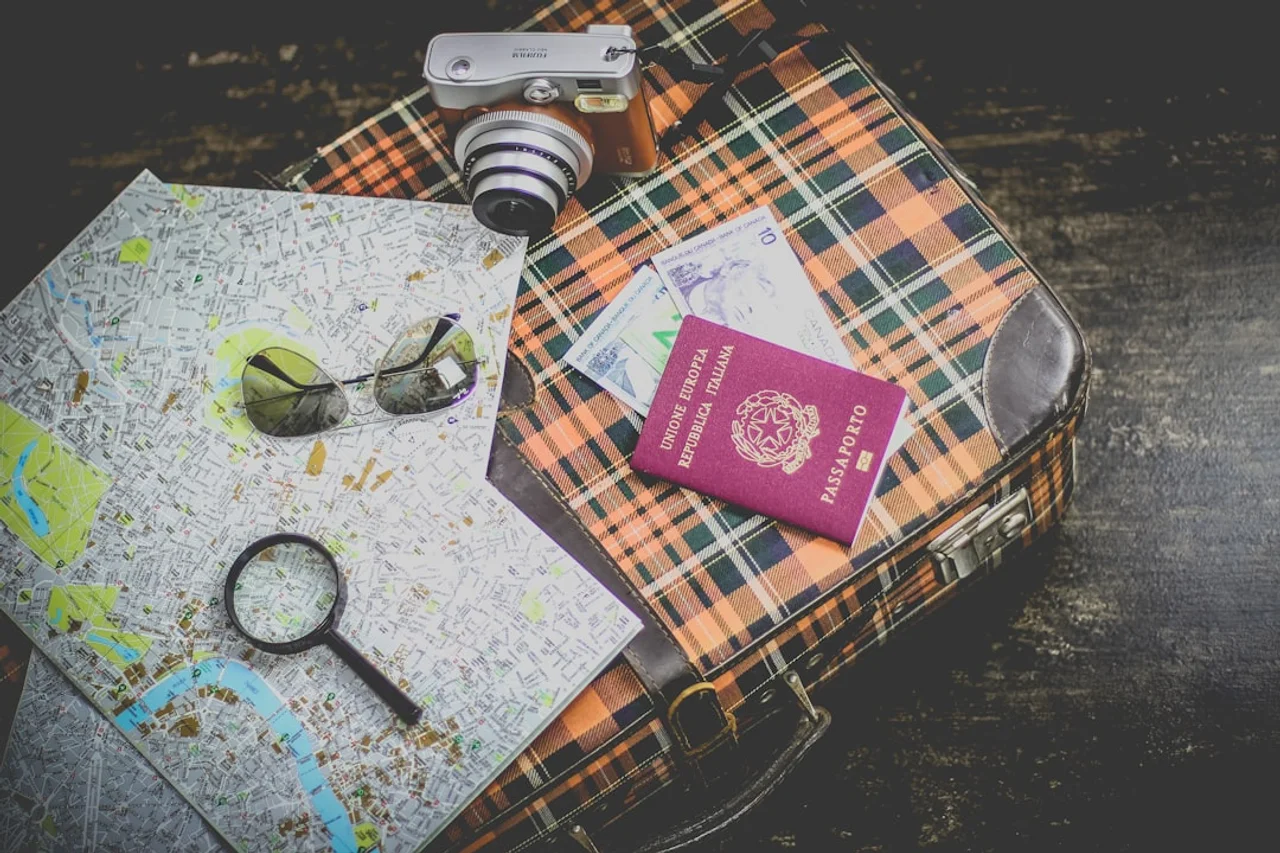
The solo suitcase tells its own story. Travellers are still packing for comfort, but their choices are becoming more deliberate. Safety items such as emergency contact details, first aid supplies and ways to keep money secure now sit higher on the list than they did in the 2023 data. Planning tools matter too. A map, GPS access or tickets booked in advance can make the first hours in a destination feel calmer. The point is not to script every minute. It is to give travellers enough confidence to wander well.
How solo travel can change the way you feel
Our research asked what positive outcomes UK travellers associate with travelling alone.
Self-sufficiency
For 47% of UK respondents, travelling alone is linked with becoming more capable. The reward is practical as well as emotional.
Mental clarity
For 32%, a solo trip can create space to think. A change of scene can make everyday concerns feel easier to sort through.
Openness to other cultures
For 27%, travelling alone can widen their view of other ways of living. Without a familiar companion, they may notice more.
Empathy
For 15%, the solo experience can deepen their connection with the world. Small encounters can feel more vivid when they meet them alone.
A more personal way to explore
The strongest solo travel trends are rarely only about destination choice. Opodo's recent study shows that UK travellers want room to decide, enough structure to feel safe and the possibility of coming home with a sharper sense of themselves.
Across markets, the data also shows different emotional priorities. US travellers are particularly likely to connect solo travel with mental clarity and renewal, while Spanish and Italian travellers are more likely to associate it with deeper connection. Those contrasts show that travelling alone does not mean travelling for one universal reason.
For UK travellers, the 2026 picture is clear enough to feel familiar. They are packing more carefully, choosing independence more confidently and treating solo travel as a meaningful way to meet the world on their own terms.
Frequently Asked Questions
Our data points to three clear themes: freedom, safety and self-development. UK travellers most often cite freedom as a motivation, while safety is the leading packing priority.
The main reasons include wanting freedom of movement, travelling when friends or family are unavailable, experimenting with a new travel style, meeting people and getting to know themselves better.
38% of UK respondents say four to seven days, making it the most popular answer. Short breaks of one to three days follow on 20%, and 11% prefer eight to fourteen days.
Flying comes first for 51% of UK respondents, followed by train travel on 44% and car on 32%. Younger travellers lean towards flying and driving, while rail is strongest among Millennials.
Our UK respondents place safety first. Useful essentials may include emergency contact details, basic first aid items and secure ways to carry money, followed by planning tools such as maps, GPS access or pre-booked tickets.
UK travellers associate solo trips with self-sufficiency, mental clarity, openness to other cultures and empathy. The strongest response in our data is self-sufficiency.
Younger groups in our research often connect solo travel with discovery, experimentation and meeting people. The 25 to 34 age group is especially likely to name freedom as a key motivation.
Ready to plan a solo trip your way?
Choose where the next morning begins, then let the route unfold at your pace.
Search flights